
Adani Group Faces Renewed U.S. Legal Pressure; Shares Drop Sharply
On January 22–23, 2026, the U.S. financial regulator Securities and Exchange Commission (SEC) took a notable new step in its long-running legal battle involving the Adani Group of companies. This development triggered a sharp fall in Indian stock markets, with several Adani shares sliding up to about 9–13% on the day.
Who is the SEC and what is it doing?
The U.S. Securities and Exchange Commission (SEC) is the federal agency responsible for regulating financial markets in the United States. It enforces laws related to securities fraud, bribery, investor protection, and financial disclosures for companies and executives that raise money from U.S. investors.
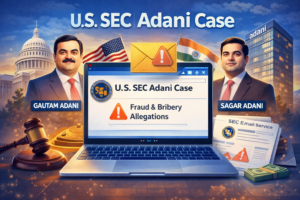
In the case of Adani, the SEC has been pursuing a civil enforcement action alleging that top executives of the Adani Group were involved in an alleged bribery and fraud scheme worth about $265 million related to contracts and disclosures tied to Adani Green Energy.
As part of legal procedure, the SEC must serve formal summonses and complaints on the defendants. But for more than a year, traditional diplomatic and procedural efforts to serve these documents through Indian authorities have not succeeded.
What has the SEC asked the U.S. court to do?
Because of the delay, the SEC has asked a U.S. federal court for permission to serve the legal summonses directly by email to Gautam Adani, the chairman of the Adani Group, and his nephew Sagar Adani — without relying on the standard route through the Indian government under international treaties.
This is a major escalation in the fight: it shows the SEC is determined to move the case forward even though the usual cross-border legal process has not worked so far.
What are the allegations?
The SEC’s civil complaint, first filed in late 2024, claims:
-
Adani executives allegedly engaged in a bribery scheme involving Indian officials to secure favorable contracts.
-
Investors, including those in the U.S., were allegedly misled about the company’s anti-corruption practices and internal controls when raising funds.
The Adani Group denies all allegations, calling them baseless and has said it will pursue legal defense options.
Why did the news hit the markets?
When news broke that the SEC wants court permission to bypass India’s refusal to serve summons and deliver them by email, investor confidence was shaken.
In stock markets on January 23, several major Adani Group shares fell sharply:
-
Adani Enterprises — fell up to around 9.1%, hitting the lowest levels in about a year.
-
Adani Green Energy, Adani Energy Solutions, Adani Power, and Adani Ports also declined significantly, with some dropping more than 10% at intraday lows.
The declines wiped out significant market value for the group as investors reacted to the perceived escalation of legal and regulatory risk.
What does this mean going forward?
-
Legal risk: The SEC’s move increases pressure on the Adani Group in the U.S. legal system and could speed up proceedings.
-
Market sentiment: Investors are likely to remain cautious until there is clarity on how the case progresses and how the group responds legally.
-
Diplomatic angle: There have already been disagreements between Indian and U.S. authorities over procedures, and this new request highlights continued tension in the cross-border legal process.
Also Read – Juspay Becomes the First Unicorn of 2026 After $50 Million Funding From WestBridge
Also Read – EAAA India Alternatives Re-Files IPO Plan | DRHP with Shareholder Quota IPO— Second Attempt After Withdrawal
2 thoughts on “Adani Stocks Fall Up to 9% After US SEC Pushes Fraud Case Forward – All You Need to Know”